Learning from Artisans, Exploring New Possibilities
For Poppy, the experience highlighted the potential of upcycling to address the growing challenge of plastic waste.
“The initiative is particularly meaningful given the amount of plastic waste generated every day. Seeing discarded plastic transformed into useful and creative products through weaving was inspiring.”
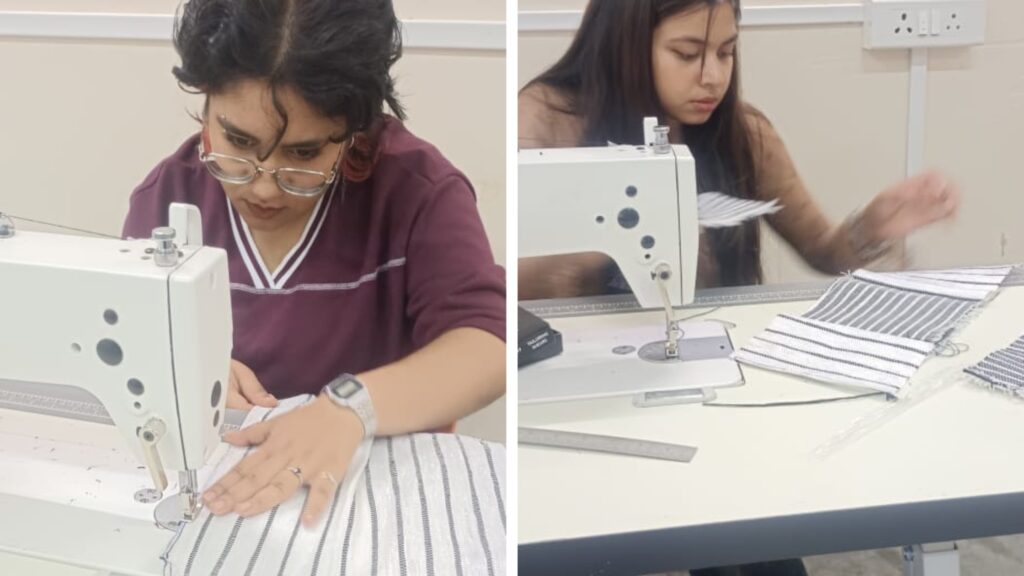
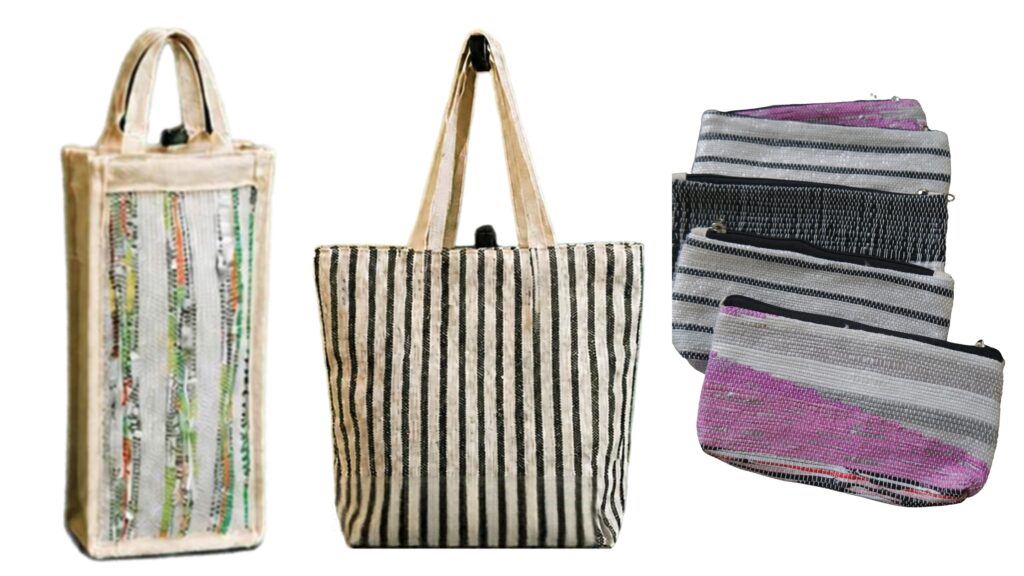
Poppy also explored ideas for expanding product range, such as experimenting with different weaving techniques, combining recycled materials with bamboo for home and lifestyle products, and using smaller fabric scraps to make items such as wallets.
 Giving Discarded Materials a New Story
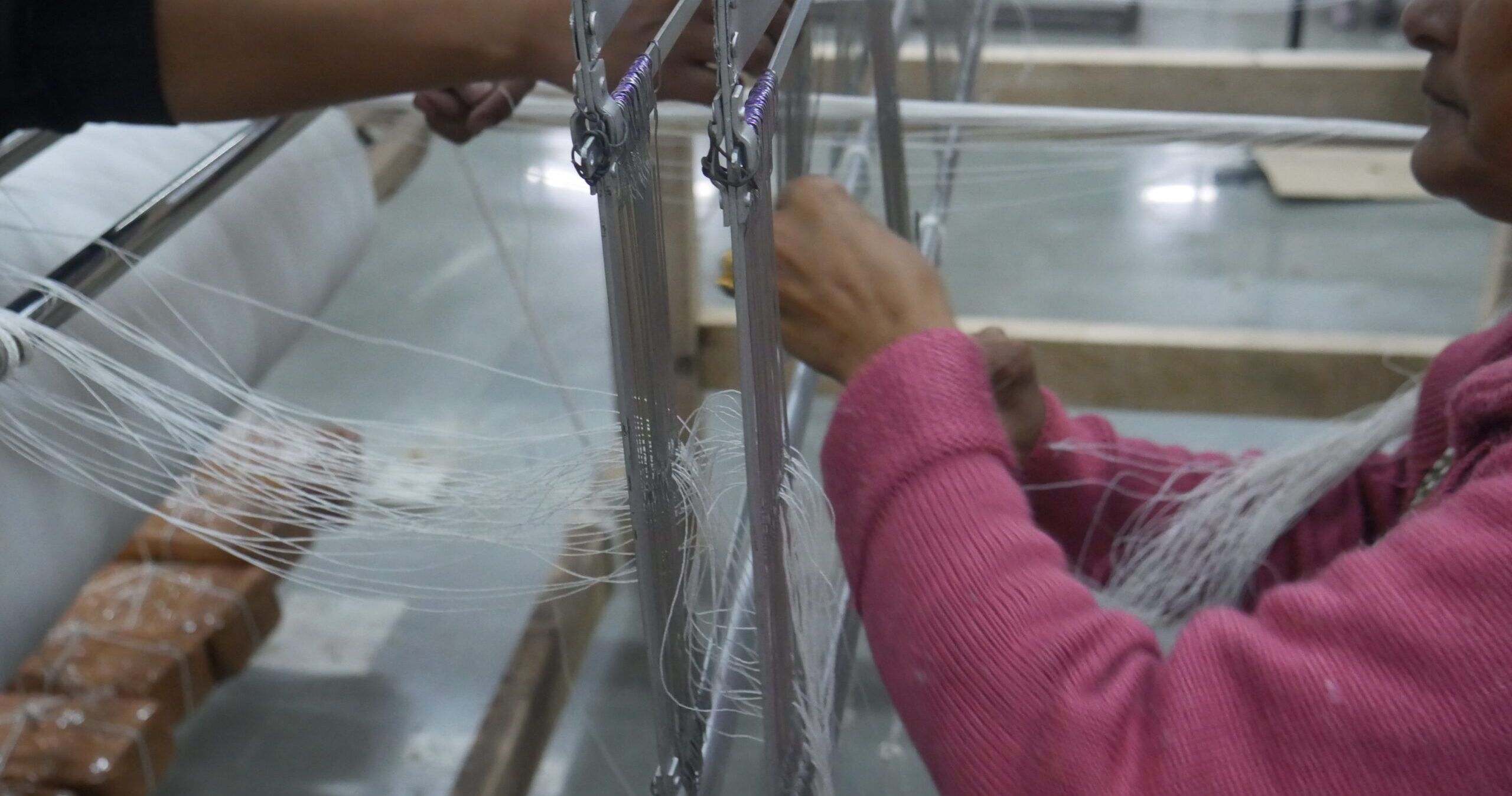
Anuja was particularly fascinated to see discarded plastic woven on a loom, having only seen it woven by hand before.“What stood out to me was that the recycled plastic had a story behind it, making the finished fabric and products even more meaningful.”
During her time at the centre, Anuja shared a wallet design with the artisans and left step-by-step instructions for another style of women’s purse. She also suggested cutting fabric scraps into strips and hand-weaving them into mats, creating thicker material while putting leftover fabric to good use.
Both students valued the opportunity to work closely with the artisans and learn from their skills and craftsmanship. They also expressed their gratitude to Ilarisha for her guidance and support throughout their stay.
Building a More Sustainable Future, Together
Experiences like these demonstrate the value of bringing together different skills and perspectives. By connecting design knowledge with the artisans’ craftsmanship, the Upcycling Project can continue to explore new products, reduce material waste and strengthen the potential of upcycling as a sustainable livelihood.
For Smart Village Movement, these collaborations are an important part of building solutions that are environmentally responsible, locally rooted and driven by the creativity of the communities themselves.